There's No Shame in Asking for Tech Help
"Sorry, this is probably a stupid question…"
I hear some version of that sentence almost every week.
It comes from retired teachers, company directors, nurses, engineers and parents. Capable people who have managed households, careers and families find themselves apologising because a printer has stopped printing, an email will not send or something unfamiliar has appeared on their screen.
Here is the honest truth from someone who fixes this stuff for a living:
It is never a stupid question. Not once. Not ever.
Why asking can feel so difficult
Most of us learned to use technology on the fly.
Nobody sat us down and properly explained cloud storage, two-factor authentication, software updates or why the Wi-Fi suddenly has two different names. Technology kept changing, and we were simply expected to keep up.
When something goes wrong, a quiet voice can start saying: you should know this by now.
So people pretend they understand and hope for the best. They put off dealing with a problem, sometimes for months. Or they struggle on alone, becoming increasingly frustrated and less confident.
Sometimes that embarrassment costs five minutes.
Sometimes it costs far more: a scam that was not questioned in time, years of family photographs left on a failing hard drive, or hundreds of pounds spent replacing a computer that could have been repaired.
Asking earlier is nearly always easier than fixing the consequences later.
Questions you never need to apologise for
You never need to feel embarrassed about saying:
- "Can you explain that without the technical terms?"
- "Can you show me again?"
- "Is this message genuine?" If you think you may have been caught out, Scam First Aid walks you through what to do, step by step.
- "Have I broken something?" Usually not, and a Tech Rescue visit can find out what is actually going on.
- "Why has this suddenly stopped working?" The most frequent culprits are covered in common computer problems and the sensible things to try first.
- "Do I really need to buy a new computer?" Quite often not. See your PC isn't old, it's just full of software you never needed.
- "I don't understand what it is asking me to do."
You do not need to diagnose the problem before contacting someone for help.
Tell me what has happened in your own words. Describe what you can see, what you were trying to do and anything that has changed. That is usually more useful than trying to use the "correct" technical language.
A simple idea from Marple
Conversations like these helped spark something new.
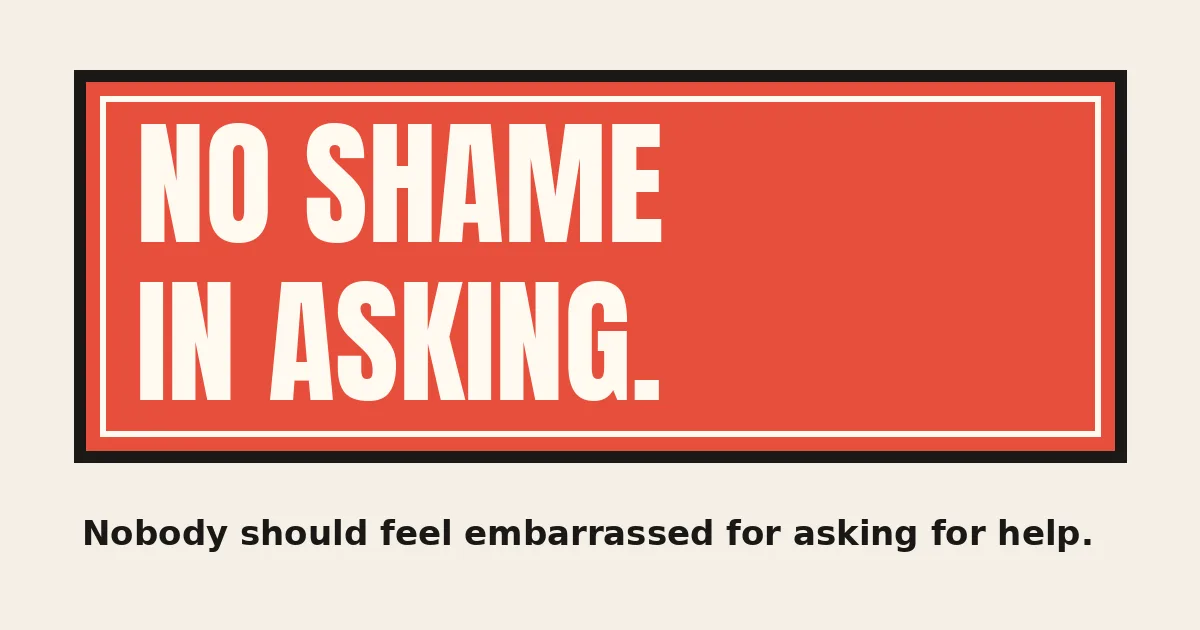
No Shame in Asking is an independent public awareness idea from Marple, built around one simple belief:
Nobody should feel stupid, weak or embarrassed for asking for help.
Not knowing is human. Asking is how we move forward.
A No Shame in Asking place displays a visible promise:
- Questions are welcome here.
- You will not be made to feel stupid for not knowing.
- You can ask us to explain something again.
There is no accreditation and no complicated membership programme. It is simply a sign that says asking is welcome here.
Marple Tech Help is the first No Shame in Asking place
I am proud that Marple Tech Help is the first business to display the No Shame in Asking promise.
In truth, it puts a name to how I have always tried to work: plain English, no unnecessary jargon, no judgement, and no making people feel silly for asking.
You can ask me to explain something again. Twice, if needed. Three times is fine too.
Technology is supposed to help you. You should not have to feel embarrassed when it does not.
Got a tech question you have been putting off?
Perhaps it feels too small to bother someone with. Perhaps you think you should already know the answer. Perhaps you are worried you have made a mistake.
Those are exactly the questions worth asking.
Tell me what is going on in your own words. You do not need to know the technical terms, and you will not be judged for asking.
I’m based in Marple and cover Stockport, SK6 and the surrounding area.
Nobody knows everything.
Nobody should be expected to.
And there is no shame in asking.