Are You Paying Too Much for Your Broadband?
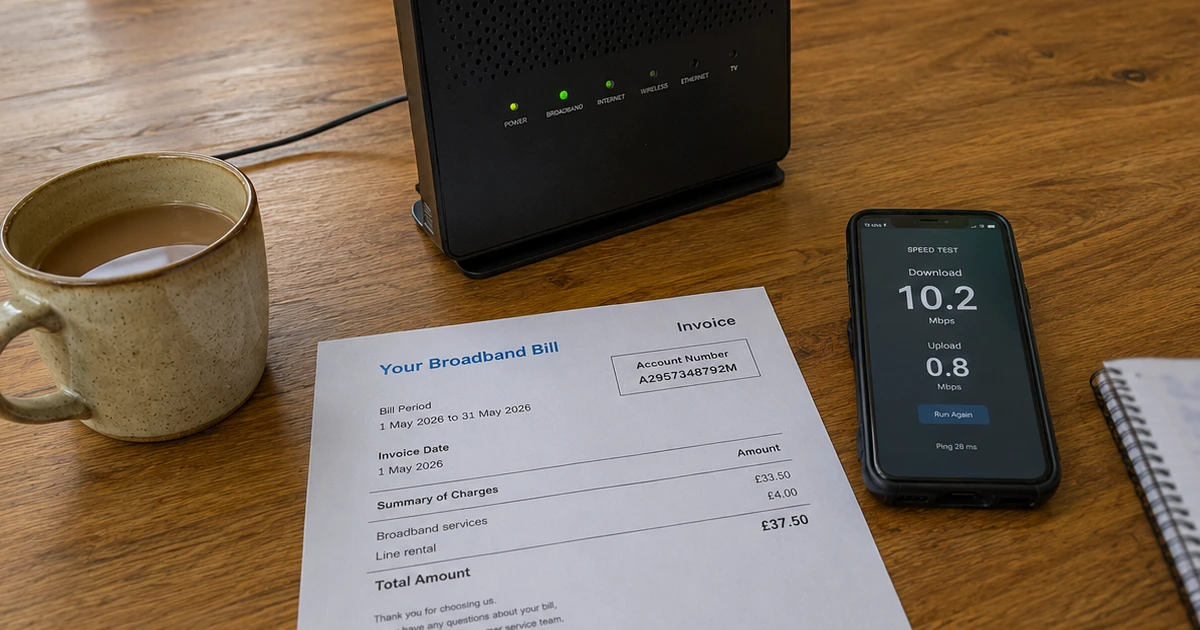
If you have not reviewed your broadband for a couple of years, there is a real chance you are paying more than you need to, especially if you are out of contract.
I visited a client recently who was paying £37.50 a month for a broadband connection of around 10 Mbps.
Their router was several years old, their account had been moved from Shell Energy to TalkTalk and then on to Utilities Warehouse, and the monthly price had crept up quietly over time. They had not done anything wrong. They simply had no idea they could challenge it, renegotiate it, or switch.
It is one of the most common situations I come across. Broadband is one of those bills people often pay without really thinking about it. It works just well enough, the direct debit goes out each month, and nobody wants the hassle of changing it. Providers know this.
The quick test
If you are paying more than £35 a month and getting around 10 Mbps, check your contract and compare your address today. You may be on an old standard tariff rather than a current deal.
What are people actually paying?
Broadband prices change all the time, and the deals available to you depend on your exact address. But in many cases, entry-level fibre broadband is available for far less than some people are paying for old, slow connections.
It is now common to see fibre and full-fibre deals in the low-to-mid £20s per month, depending on provider, postcode, contract length and any annual price rises.
That matters because many people are still paying £35, £40 or more for connections that are slower than modern entry-level packages.
If that sounds like you, and you are getting around 10 Mbps for that money, there is a very good chance you are out of contract, on an old standard tariff, or simply not on the best deal available to you.
That is usually the worst place to be. Providers reserve their best prices for new customers and for existing customers who renew or negotiate. If your deal ends and you do nothing, you often keep paying, but you do not get anything better in return.
Why does this happen?
The main reason is inertia.
People sign up, the deal runs for 18 or 24 months, then the promotional price ends. Nobody makes a big fuss about it. The bill just carries on.
It is especially common with bundled providers, where broadband is wrapped together with energy, mobile, insurance or other household services. The appeal is convenience, and for some people that genuinely matters. But it can also make the broadband part feel harder to compare.
The important thing to know is this: your broadband can still be checked, compared and questioned like any other bill.
A bundle that looked reasonable three years ago may no longer be good value now.
Watch out for annual price rises
Many broadband contracts now include a fixed annual price rise. For new contracts taken out from 17 January 2025, providers can no longer use inflation-linked or percentage-based mid-contract price rise terms. Any future rise must be shown clearly in pounds and pence before you sign up.
That is better than vague inflation-based increases, but it still means the price you see on day one may not be the price you pay for the whole contract. Ofcom explains the rule change in its guidance on mid-contract price rises.
If you are on an older deal, you may instead still have an inflation-linked rise written into your contract, or you may be out of contract altogether, where the price simply sits at a high standard rate.
For example, a broadband deal advertised at £25 a month may rise by £3.50 or £4 each April during the contract. Over 18 or 24 months, that can make a meaningful difference.
| Check this | Why it matters |
|---|---|
| Starting monthly price | The headline figure is only the beginning |
| Contract length | A cheaper 24-month deal may still rise twice |
| Setup fee | Can change the real first-year cost |
| Reward card or cashback | Useful, but only if you actually claim it |
| April increases | Can make the second year more expensive |
| Out-of-contract price | This is what you may roll onto if you forget to renew |
| Landline or calls package | You may be paying for extras nobody uses |
The cheapest headline deal is not always the cheapest deal overall.
What should you check first?
Before switching or ringing your provider, check two things.
1. Your actual speed
Use a speed test on a device close to your router. A wired connection is best, but Wi-Fi close to the router is still useful. Fast.com and Speedtest by Ookla are both fine.
Look at the download speed first. If you are getting around 10 Mbps or less and paying more than £25 a month, it is well worth checking what else is available.
2. Your contract status
Log in to your provider’s account, use their app, or look at a recent bill. Find the contract end date, package name, monthly cost and speed estimate.
If you cannot remember the last time you agreed to a broadband deal, there is a good chance you are out of contract.
Also check whether you are paying for calls or a landline, and whether your contract mentions annual price rise terms.
What is actually available in Marple?
Broadband availability in Marple and the wider SK6 area varies street by street.
Some homes can now get full fibre. Others are still on standard fibre-to-the-cabinet broadband, which uses fibre to the local cabinet and copper wiring for the final stretch into the home. A few properties still have more limited options because of distance from the cabinet, local infrastructure, or installation issues.
This is why postcode checking matters. Do not rely on what your neighbour has. Do not rely on what a provider advertises nationally. Check your exact address.
The quickest way to do this is to use a broadband comparison site such as MoneySavingExpert, Uswitch, Broadband Genie or Compare the Market. You can also use the Openreach fibre checker to see whether full fibre is available or planned for your property.
If full fibre is not available yet, that does not mean you are stuck with a bad deal. Standard fibre can still often provide speeds around 35 to 70 Mbps, which is a big step up from a 10 Mbps connection and may cost less than an old out-of-contract package.
For a broader local buying guide, see Choosing a Broadband Provider in Marple.
Should you negotiate or switch?
If you are happy with the service and would rather avoid changing provider, ring your current provider first.
The key is to check the market before you call. You need to know what similar deals are available elsewhere. That gives you leverage.
A simple script
“I’ve been a customer for a few years and I’ve noticed I can get faster broadband elsewhere for less than I’m currently paying. Before I switch, I wanted to ask what you can offer me.”
You do not need to be aggressive. That is usually enough to get through to a better deal.
If they cannot get close to the market price, switching is much easier than it used to be.
Switching is simpler than many people think
For most home broadband switches, the new provider now handles the process. This is called One Touch Switch.
In plain English, it means you normally sign up with the new provider and they arrange the move from the old one. You usually do not need to ring your old provider to cancel. Ofcom’s consumer guide to One Touch Switch explains the current process.
There are still things to check, especially if you are in contract, have a bundled service, use a landline number you want to keep, or rely on extras such as an email address from your current provider. But for many households, switching broadband is far less complicated than it used to be.
Before you switch, check your email address
If your main email address belongs to your broadband provider, check what happens if you leave. It is safer to move important accounts to an independent email address before changing provider. If you have a Virgin Media address, Virgin Media email is moving to Junara, which is worth dealing with whether you switch or not.
Check whether you are paying for a landline you do not use
Many older broadband deals were bundled with a phone line. Some people are still paying for calls or landline features they no longer use.
Full fibre broadband does not require a traditional copper phone line. Some providers offer digital phone services if you still need a home phone, but many households no longer do.
If nobody in the house uses the landline, it is worth checking whether your package still includes call features or line-related extras that are adding cost.
Social tariffs are worth knowing about
If you are on a low income or receive certain benefits, you may qualify for a broadband social tariff.
These are cheaper broadband and phone packages offered by major providers for eligible households, and can be a very sensible option for people who mainly need reliable internet for email, browsing, video calls, streaming and everyday use.
Eligibility varies by provider, but it is especially worth checking if you receive Universal Credit, Pension Credit or similar support. Ofcom keeps a plain-English list of broadband and phone social tariffs.
The short version
Check what speed you are getting. Check what you are paying. Check whether you are still in contract. Then compare what is available at your exact address.
If you have not reviewed your broadband for a couple of years, there is a good chance you are paying more than you need to. That is especially true if you are paying over £35 a month on a connection that has not been reviewed in years.
You may not need anything fancy. You may not need the fastest full-fibre package. But you should not be paying premium prices for old, slow broadband that no longer represents good value.
A ten-minute check could save you a lot of money over the next year.
Independent advice matters. Marple Tech Help does not sell broadband packages and does not receive commission from providers. The aim is to help you understand what you have, what is available and whether changing makes sense.
Want an Independent Broadband Bill Check?
I can help you check your current broadband speed, contract status, router setup and realistic options before you renew or switch.
No commission, no upselling and no pressure to change provider.
I’m based in Marple and cover Stockport, SK6 and the surrounding area.